Angry Crowd Sets Ebola Hospital Tents Ablaze in DR Congo Amid Fear and Misinformation
An angry crowd in eastern Democratic Republic of Congo has reportedly set Ebola treatment tents on fire amid growing fear, mistrust, and tensions surrounding the latest Ebola outbreak that has already killed dozens.
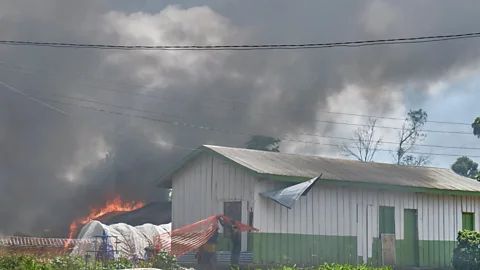
Panic and tension erupted in eastern Democratic Republic of Congo (DR Congo) after an angry crowd reportedly attacked and set fire to Ebola treatment tents in one of the regions affected by the country’s latest deadly outbreak.
The incident, which occurred in Ituri province, has heightened fears among health authorities already struggling to contain the rapidly spreading Ebola virus that has claimed dozens of lives in recent weeks.
According to local officials and humanitarian sources, protesters stormed a temporary Ebola response site after accusing health workers and authorities of failing to provide clear information about the outbreak and response measures. Several treatment tents and emergency medical structures were destroyed during the attack. (Reuter)
Chaos Erupts at Ebola Treatment Site
Witnesses said the crowd gathered near the Ebola response center before violence suddenly erupted, with some individuals reportedly throwing objects and setting temporary structures ablaze.
Health workers and emergency responders were forced to flee the scene as flames engulfed medical tents used for screening and isolating suspected Ebola patients.
Local authorities later deployed security personnel to restore order and secure the area.
Although no healthcare workers were immediately reported killed during the attack, officials said the destruction of treatment infrastructure could severely disrupt containment operations in the region. (apnews)
Fear and Distrust Fuel Violence
Public health experts say fear, misinformation, and distrust toward authorities continue to undermine Ebola response efforts in parts of eastern Congo.
Many communities in conflict-affected regions remain deeply suspicious of government institutions and foreign medical teams, especially during outbreaks involving quarantines, isolation procedures, and emergency restrictions.
Some residents reportedly believed the Ebola centers were linked to political or financial exploitation rather than genuine medical assistance.
Rumors circulating on social media and within local communities allegedly contributed to tensions before the attack.
Health officials have repeatedly warned that misinformation remains one of the biggest obstacles to controlling Ebola outbreaks in Central Africa. (bbcnews)
New Ebola Outbreak Continues to Spread
The attack comes as DR Congo battles a new Ebola outbreak that has already killed at least 65 people, according to regional health authorities.
The outbreak is concentrated mainly in Ituri province, where hundreds of suspected cases are under investigation.
The Africa Centres for Disease Control and Prevention (Africa CDC) and the World Health Organization (WHO) have launched emergency response operations involving contact tracing, vaccination campaigns, and treatment support.
However, insecurity and attacks on health facilities are making containment efforts increasingly difficult. (who)
Health Workers Under Growing Threat
Medical personnel responding to Ebola outbreaks in eastern Congo have frequently faced security threats in previous epidemics.
During earlier Ebola outbreaks between 2018 and 2020, treatment centers were repeatedly attacked by armed groups and angry residents, leading to deaths, injuries, and major disruptions in response operations.
Humanitarian organizations say the latest violence could discourage health workers from operating in some high-risk communities.
One aid worker described the situation as “extremely dangerous,” warning that fear-driven attacks could worsen the spread of the disease if patients avoid treatment centers. (The Guardian)
Why Ebola Sparks Panic
Ebola is one of the world’s deadliest viral diseases, causing severe fever, vomiting, diarrhea, and internal bleeding in advanced stages.
The virus spreads through direct contact with the bodily fluids of infected individuals and has historically recorded high fatality rates during outbreaks.
Because symptoms can initially resemble other illnesses such as malaria or typhoid, fear often spreads rapidly in affected communities.
Public health experts say mistrust becomes especially dangerous when communities reject medical advice or attack treatment centers.
In regions already affected by armed conflict, poverty, and weak healthcare systems, outbreaks can quickly trigger social unrest.
Authorities Appeal for Calm
Congolese authorities and international health agencies have appealed for calm following the attack.
Officials urged residents to cooperate with health workers and avoid spreading false information capable of fueling panic.
Community leaders, religious organizations, and local radio stations are now being mobilized to improve public awareness and encourage cooperation with medical teams.
Health experts stress that public trust is essential to stopping Ebola transmission.
“Without community support, controlling Ebola becomes almost impossible,” one WHO official reportedly stated. (Al Jazeera)
Regional Concerns Grow
Neighboring countries, including Uganda and South Sudan, have already intensified border screening and surveillance following confirmation of the outbreak.
The destruction of treatment facilities in Congo has raised concerns that containment efforts may slow down at a critical moment, increasing the risk of cross-border spread.
International agencies are now reviewing additional security measures for health workers operating in high-risk zones.
The Africa CDC has warned that the outbreak remains a serious regional threat if response efforts are disrupted further. (Africa CDC)
Long History of Ebola in DR Congo
The Democratic Republic of Congo has experienced more Ebola outbreaks than any other country since the virus was first identified near the Ebola River in 1976.
Eastern Congo remains vulnerable due to insecurity, population displacement, and limited healthcare access.
Previous outbreaks demonstrated that community engagement and trust-building are often just as important as medical treatment in containing the virus.
Experts say restoring confidence after attacks like the recent tent burning will be critical to prevent wider transmission.
Conclusion
The burning of Ebola hospital tents in eastern DR Congo highlights the dangerous combination of fear, misinformation, and mistrust surrounding deadly disease outbreaks.
As authorities race to contain the latest Ebola flare-up, attacks on health facilities threaten to undermine already fragile response efforts in one of Africa’s most vulnerable regions.
With dozens already dead and fears of wider regional spread growing, health officials warn that cooperation between communities and medical teams will be essential to stopping the outbreak before it escalates further.