Alan Greenspan Dies at 100: Former Federal Reserve Chief Who Shaped Modern U.S. Economy Leaves Complex Legacy
Alan Greenspan, the influential former U.S. Federal Reserve chairman who guided America's economy for nearly two decades, has died at the age of 100. The celebrated economist leaves behind a legacy of prosperity, innovation, and controversy.
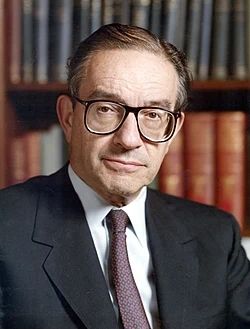
Alan Greenspan, the economist whose nearly two-decade leadership of the U.S. Federal Reserve helped define modern American monetary policy, has died at the age of 100. Once hailed as the "Maestro" of global finance, Greenspan passed away on Monday at his home from complications related to Parkinson's disease, according to a statement released by his wife, veteran journalist Andrea Mitchell. (Reuters)
Greenspan's death marks the end of an era in American economic history. As chairman of the Federal Reserve from August 1987 to January 2006, he steered the world's largest economy through stock market crashes, recessions, financial crises, and one of the longest periods of sustained economic expansion in U.S. history.
Mitchell described her husband as "a giant of a man who helped shape the U.S. economy for decades under presidents of both parties" and praised both his intellect and humility. She said that despite his enormous accomplishments, Greenspan was always willing to acknowledge his mistakes, adding that "being his life partner was the joy of my life."
Appointed by President Ronald Reagan in 1987, Greenspan went on to serve under four U.S. presidents - Ronald Reagan, George H.W. Bush, Bill Clinton, and George W. Bush - making him one of the longest-serving Federal Reserve chairmen in American history.
His tenure began dramatically. Just weeks after taking office, Wall Street experienced the infamous "Black Monday" stock market crash of October 1987, when the Dow Jones Industrial Average suffered its largest one-day percentage decline ever. Greenspan quickly assured financial markets that the Federal Reserve would provide whatever liquidity was necessary to stabilize the financial system, a move widely credited with preventing a deeper economic crisis. (CityNews Toronto)
Over the following 18½ years, Greenspan became synonymous with steady economic stewardship. Under his leadership, the United States experienced a remarkable decade-long expansion from 1991 to 2001, characterized by low inflation, falling unemployment, rising productivity, and rapid technological innovation fueled by the internet revolution.
His willingness to resist calls for aggressive interest rate hikes during the booming 1990s earned him widespread admiration. Many economists credited him with recognizing that technological advances had fundamentally improved productivity, allowing the economy to grow faster without triggering inflation.
The financial press elevated him to near-legendary status, dubbing him the "Oracle" and the "Maestro" because investors around the world closely analyzed every speech and congressional testimony for clues about future interest rate decisions. Even his famously cryptic communication style became part of Federal Reserve folklore. He once joked, "If I seem unusually clear, you've probably misunderstood what I said." (Reuters)
Born in New York City in 1926, Greenspan's path to economics was anything but conventional. Before entering the world of finance, he studied clarinet at Juilliard School and performed professionally with a touring jazz band. He later pursued economics at New York University, eventually earning a doctorate and establishing a successful economic consulting firm before entering public service.
His influence extended well beyond monetary policy. Greenspan became one of Washington's most respected economic advisers, shaping discussions on inflation, employment, fiscal policy, and financial regulation during a transformative period for the U.S. economy.
However, his reputation suffered a significant blow following the global financial crisis of 2007–2009.
Critics argued that Greenspan's prolonged low-interest-rate policies, combined with his strong belief in financial deregulation and market self-correction, contributed to the housing bubble that ultimately burst, triggering the worst financial crisis since the Great Depression.
Many economists also faulted his opposition to stricter oversight of complex financial derivatives, which later amplified losses across the banking sector.
Greenspan himself later acknowledged that he had made a critical error in assuming financial institutions would adequately regulate themselves. That admission became one of the defining moments of his post-Federal Reserve legacy and reflected a rare public concession from one of America's most influential policymakers. (Reuters)
Despite the criticism, many analysts maintain that Greenspan's contributions fundamentally reshaped central banking. His approach to crisis management, data-driven decision-making, and transparent communication influenced subsequent Federal Reserve leaders, including Ben Bernanke, Janet Yellen, and Jerome Powell.
Even after retiring in 2006, Greenspan remained an active voice in economic policy. Through his consulting firm, Greenspan Associates, he advised corporations and financial institutions while continuing to write books, publish commentary, and speak on global economic issues.
Earlier this year, he joined fellow former Federal Reserve chairs in defending the independence of the U.S. central bank, warning against political interference in monetary policy and arguing that institutional independence remains essential to economic stability. (Investing.com)
Throughout his career, Greenspan inspired both admiration and fierce debate. Supporters credit him with guiding America through extraordinary prosperity, while critics contend that some of his policies laid the groundwork for devastating financial instability.
Regardless of those competing assessments, few dispute his enormous influence on modern economics.
His tenure transformed the role of central banking, elevated the Federal Reserve's global stature, and left an imprint on financial markets that continues to shape policy discussions around the world.
As tributes pour in from economists, policymakers, and world leaders, Alan Greenspan is being remembered as one of the most consequential economic figures of the past century - a man whose ideas helped define both the triumphs and the challenges of modern capitalism.