AI Was Supposed to Mean Less Work. Why Some Tech Workers Are Working Up to 90 Hours a Week
AI was expected to reduce workloads, but tech workers and startup founders report longer hours. Here is why AI productivity gains may be creating more work instead of more free time.
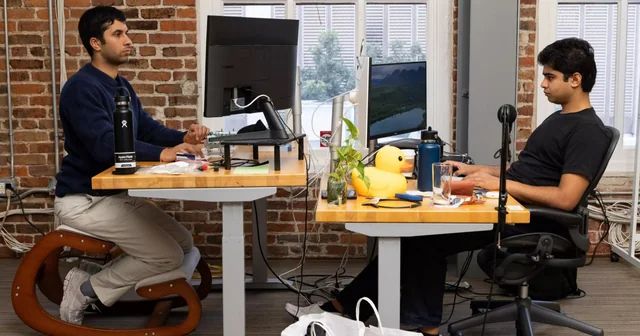
Artificial intelligence was supposed to transform the workplace by taking over repetitive tasks, increasing productivity and giving employees more time to focus on meaningful work.
Instead, a growing contradiction is emerging in the technology industry: AI can make work faster without necessarily making working lives easier.
The debate intensified during the week after Meta Chief Technology Officer Andrew Bosworth told employees that productivity gains from AI should be used to create more products rather than more time off. The comments have reignited questions about who ultimately benefits when artificial intelligence allows employees to accomplish more in less time.
At the same time, startup founders and technology workers have described working exceptionally long hours, with some reporting schedules approaching or exceeding 90 hours a week.
The result is a growing debate over whether AI will usher in a shorter working week—or simply create a new expectation that employees should produce dramatically more.
Meta CTO says AI gains should mean more output
Bosworth made his comments during a question-and-answer session with Meta employees in July.
According to reporting by Business Insider's report on Bosworth's comments, an employee asked whether AI productivity improvements could be used to restore “Meta Days”, a former programme that gave employees additional days away from work.
Bosworth rejected the idea.
He argued that if an employee gains an hour through AI, that additional capacity should be invested in building more products for Meta's billions of users.
He reportedly described the request for additional time off as “very dumb”, although he later acknowledged that he had come down too hard on the employee.
The comments are significant because they illustrate one of the most important questions surrounding workplace AI: Does greater productivity reduce working time, or does it simply raise expectations?
AI can eliminate tasks without eliminating workload
The assumption that automation automatically produces shorter working hours is not supported by every study.
Research on generative AI has found that workers can indeed save time on certain activities. A 2025 field experiment involving about 6,000 knowledge workers found that access to generative AI reduced time spent on email and appeared to help workers complete documents faster. However, technology did not significantly reduce time spent on meetings. (arXiv)
That distinction is important.
Removing one task does not necessarily remove the demand for the employee. Instead, the time saved can be redirected toward another assignment.
A worker who needed three hours to prepare a report might now complete the first draft in one hour with AI. But the employer may then expect three reports instead of one.
Productivity therefore becomes a mechanism for increasing output rather than reducing hours.
The rise of the 90-hour AI work culture
The contradiction is particularly visible in Silicon Valley's startup ecosystem.
Some AI founders have openly embraced extremely long working weeks. A Wall Street Journal report highlighted a generation of young AI entrepreneurs working extraordinarily long hours in an increasingly competitive race to develop products and attract investment. (Chat GPT Is Eating the World)
Former Scale AI co-founder Lucy Guo, for example, has said she works about 90 hours a week and has described an intense routine built around early mornings, long workdays and limited time away from business.
Her example has become part of a wider technology culture in which extreme commitment is sometimes presented as evidence of ambition.
But the issue becomes more complicated when such expectations move from founders to employees.
If AI enables a small team to accomplish what previously required a much larger workforce, companies can theoretically choose between hiring more people, reducing working hours or increasing the amount of work assigned to existing employees.
The business incentive often favours the third option.
AI may be intensifying burnout
The pressure is already being felt by technology entrepreneurs.
A recent report in Business Insider on AI-related burnout among startup founders described founders who expected AI to give them more time but instead found themselves more stressed and emotionally exhausted.
One explanation is that AI removes many of the less demanding tasks that once provided natural breaks during the working day.
When artificial intelligence handles routine activities such as formatting documents, cleaning spreadsheets or drafting basic communications, workers can be left with a day filled almost entirely with high-level decisions.
That may make the workday feel more intense even if the number of tasks has fallen.
AI can also create a sense that everything is now possible.
If software can produce code, reports, presentations, marketing material and research in minutes, employees may feel pressure to take on more projects because the technological barriers have fallen.
The result can be a productivity paradox: workers become more efficient but also busier.
What the research says about productivity
There is evidence that AI can deliver genuine productivity gains.
A 2026 study from the National Bureau of Economic Research examined survey data from nearly 750 corporate executives and found positive labour-productivity gains associated with AI adoption, particularly in high-skill services and finance.
But productivity gains do not automatically determine how the benefits are distributed.
A company can use higher productivity to increase profits, lower prices, expand production, reduce headcount, raise wages or shorten working hours.
Technology itself does not decide the outcome.
Management decisions, workplace culture, labour laws and employee bargaining power determine what happens to the time saved.
The health cost of working longer
The idea of replacing AI-generated efficiency with longer working hours also raises serious health concerns.
The World Health Organisation and International Labour Organisation have warned that working 55 hours or more per week is associated with significantly higher risks of stroke and ischemic heart disease.
Their analysis estimated that long working hours were responsible for 745,000 deaths from stroke and heart disease in 2016. (World Health Organization)
A 90-hour working week is therefore far beyond the threshold identified by international health authorities as a serious risk.
The International Labour Organisation also notes that excessive working hours can damage workers' health, reduce adequate rest and interfere with family responsibilities. (
So, will AI create a shorter workweek?
The answer depends less on what AI can do than on what businesses decide to do with what AI can do.
Technology has repeatedly increased productivity without necessarily producing proportional reductions in working hours. AI could follow the same pattern.
There is, however, another possible future.
Companies could treat AI productivity gains as a dividend shared with employees through shorter workweeks, additional leave, higher salaries, greater flexibility or more time for training and innovation.
Some technology leaders have already argued about this approach. Billionaire entrepreneur Mark Cuban, for example, has said AI agents could eventually allow employees to reduce their working day while maintaining their pay. (Entrepreneur)
Conclusion
The emerging AI workplace presents a striking contradiction.
Artificial intelligence can make employees faster without necessarily making them freer.
Meta's Bosworth argues that additional capacity created by AI should be invested in building more products. Meanwhile, AI founders and workers are increasingly describing cultures of intense workloads, with some schedules reaching 90 hours a week.
Technology has therefore not settled the debate over the future of work. It has made the question more urgent.
The real measure of AI's success may ultimately not be how much more work humanity can produce.
It may be whether society can use unprecedented productivity gains to give people something technology has always promised but rarely delivered: more time to live.