Abuja Filling Stations Raise Petrol Prices as Dangote Refinery Increases Gantry Cost
Abuja filling stations have raised petrol prices to as high as ₦1,300 per litre after repeated increases in Dangote Refinery's gantry price, putting fresh pressure on motorists and households.
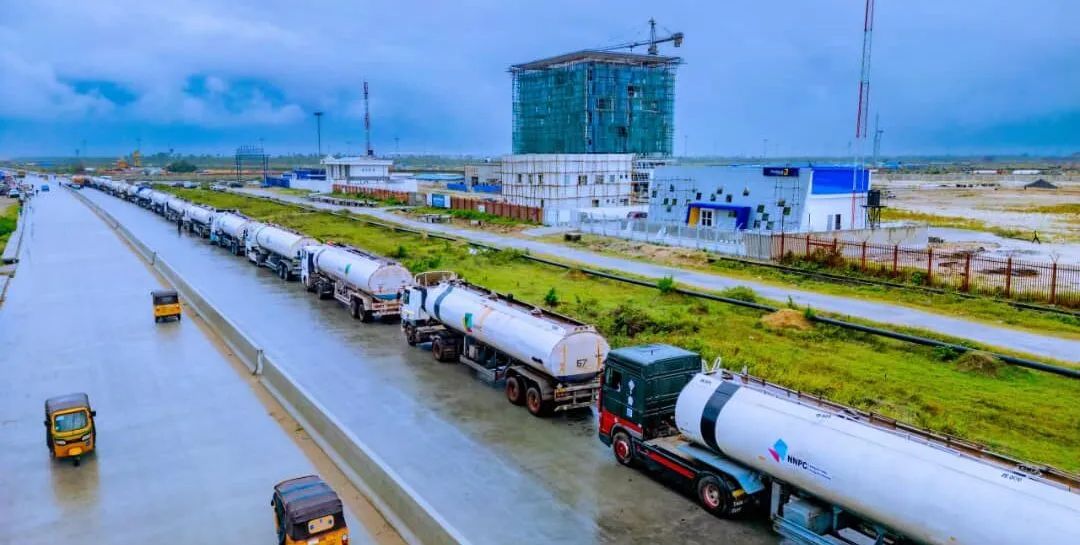
Motorists in the Federal Capital Territory are facing another increase in the price of petrol as several filling stations across Abuja have raised their pump prices following repeated adjustments in the cost of Premium Motor Spirit (PMS) supplied by the Dangote Petroleum Refinery.
The latest increases have pushed petrol prices at some Abuja filling stations to ₦1,300 per litre, reversing some of the price reductions witnessed earlier in August.
A market survey reported on August 30 showed that prices varied significantly between filling stations. AY Shafa outlets, for example, increased their pump price from ₦1,250 to ₦1,270 per litre, while Optima raised its price from ₦1,260 to ₦1,300 per litre. NNPC retail outlets also sold at around ₦1,270 per litre. (Peoples Gazette Nigeria)
The latest development has renewed concerns about the volatility of Nigeria's downstream petroleum market and the impact of petrol prices on transportation, food prices and household expenses.
Dangote refinery price increases trigger market reaction
Independent petroleum marketers have attributed the latest pump-price increases largely to repeated adjustments in the price of petrol sold by the Dangote Refinery.
The refinery's gantry price reportedly moved from ₦1,165 per litre to ₦1,185, before subsequent increases to ₦1,200 and then ₦1,265 per litre within the space of a week.
The latest adjustment represents a ₦65 increase from the previous ₦1,200 per-litre gantry price and has been reflected in retail prices across the FCT.
The Independent Petroleum Marketers Association of Nigeria (IPMAN) said marketers had been compelled to review their pump prices following the series of adjustments.
IPMAN National Publicity Secretary Chinedu Ukadike attributed the increases to the changes in the refinery's gantry price, indicating that retailers were responding to higher acquisition costs.
The development illustrates how changes at the refinery or depot level can quickly filter through the downstream petroleum market and eventually reach consumers.
NNPC also raises Abuja pump price
The Nigerian National Petroleum Company Limited (NNPCL) has also adjusted its petrol price at its retail outlets.
NNPCL increased the price in Abuja and neighbouring areas from ₦1,250 to ₦1,270 per litre, adding ₦20 to the previous price.
The adjustment has further widened the range of petrol prices motorists encounter across the capital, where independent and major marketers are setting prices based on their supply costs and commercial considerations. (Politics Nigeria)
Some private filling stations are selling above the NNPC rate, with reports showing prices ranging from approximately ₦1,230 to nearly ₦1,300 per litre depending on the retailer and location.
This variation means motorists may pay considerably different amounts for the same product within relatively short distances.
Price increase comes despite cheaper crude
One of the most striking aspects of the latest development is that it occurred despite a decline in international crude oil prices.
Reports on August 30 indicated that international crude had fallen from around $92 to $87.31 per barrel, with Brent crude trading at approximately $88.10 at the time.
Ordinarily, a decline in crude prices could provide some relief for refined petroleum products. However, petrol pricing in Nigeria is affected by several other factors, including refinery pricing, exchange-rate movements, transportation costs, supply arrangements and market conditions.
Consequently, a fall in the international crude benchmark does not necessarily translate immediately into lower petrol prices at Nigerian filling stations.
Why petrol prices vary from one station to another
The differences in pump prices across Abuja reflect the increasingly market-driven nature of Nigeria's downstream petroleum sector.
Since the removal of the petrol subsidy, marketers have generally adjusted prices in response to their acquisition costs and prevailing market conditions.
A station that purchases petrol at a lower depot or gantry price may be able to sell more cheaply than another retailer that obtains its supply at a higher cost.
Location also plays a role.
Filling stations located farther from supply depots may incur higher transportation and logistics expenses. Those additional costs can eventually be reflected in the price paid by motorists.
Competition between retailers can also influence pricing, with some outlets maintaining lower prices to attract customers while others adjust more quickly when wholesale costs rise.
Motorists face renewed economic pressure
The latest increase is particularly concerning for motorists because petrol remains central to Nigeria's economy.
Private vehicles, commercial transport operators, logistics companies, small businesses and many households depend heavily on petrol.
Higher fuel prices can therefore trigger a chain reaction across the economy.
Transport operators may increase fares to compensate for higher operating costs. Businesses that rely on petrol-powered generators may also face larger electricity and production expenses.
Those additional costs can ultimately be passed on to consumers through higher prices for goods and services.
The latest Abuja increases have consequently raised fresh concerns about the cost of living at a time when many Nigerians are already struggling with elevated household expenses.
Economist Samson Ogunjimi described the situation as increasingly difficult for households and called for government intervention to stabilise fuel prices.
Price volatility continues
The latest increases are another reversal in a highly volatile petrol market.
Earlier in August, some petrol retailers reduced their pump prices following reductions in the Dangote Refinery's ex-depot price.
On August 3, for example, Abuja residents welcomed a reduction in the refinery's petrol price from about ₦1,330 to between ₦1,265 and ₦1,300 per litre. (News Agency of Nigeria)
The reductions provided temporary relief to consumers, but the subsequent increases have once again pushed prices upward.
The rapid changes demonstrate how quickly the downstream market can respond to shifts in supply costs.
For motorists and businesses, the unpredictability can be almost as problematic as the absolute price of petrol because it makes budgeting more difficult.
Dangote refinery's growing influence
The latest episode also highlights the increasing influence of the Dangote Refinery on Nigeria's petrol market.
As one of the country's major domestic sources of refined petroleum products, changes in its gantry price can have a significant effect on what marketers ultimately charge consumers.
The refinery has also introduced initiatives aimed at improving distribution, including free delivery of petrol to selected destinations.
Despite those efforts, however, pump prices have continued to fluctuate.
The situation illustrates that domestic refining alone does not automatically guarantee stable retail prices. Other elements of the downstream supply chain still affect the final cost motorists pay.
Government intervention being sought
With petrol prices again approaching or exceeding ₦1,300 per litre in parts of Abuja, pressure is likely to increase on the Federal Government to address the volatility.
Consumers want greater predictability, while marketers argue that they must adjust prices to reflect their acquisition and operating costs.
The challenge for policymakers is therefore to encourage a competitive and efficient downstream market without artificially suppressing prices in a way that creates shortages or distorts supply.
The government must also balance the interests of consumers with those of refiners, importers, depot operators, transporters and filling-station owners.
Impact on transportation and inflation
Any sustained increase in petrol prices could have broader implications for Nigeria's inflation outlook.
Transportation is closely connected to the cost of food and other consumer goods. When the cost of moving people and products rises, businesses generally face pressure to increase prices.
This is particularly important for Abuja, where a large population depends on commercial transportation for daily commuting.
If the latest price increases persist, transport operators could face pressure to raise fares, potentially increasing the financial burden on workers and students.
Small businesses that rely on petrol-powered generators may also see their operating costs rise.
What motorists should expect
For now, motorists in Abuja should expect continued price differences between filling stations as marketers respond to changing supply costs.
The latest market survey suggests that petrol is being sold at roughly ₦1,230 to ₦1,300 per litre at different outlets across the FCT, although prices can change rapidly.
The situation could change again if the Dangote Refinery adjusts its gantry price, if NNPCL changes its retail price or if broader supply and crude-market conditions shift.
For consumers, the immediate reality is that petrol prices remain highly volatile.
The latest Abuja increase underscores the continuing transformation of Nigeria's downstream petroleum market following the removal of fuel subsidies.
While increased domestic refining capacity has reduced dependence on imported petrol, consumers are still exposed to changes in refinery prices, logistics and market dynamics.
The challenge now is to achieve a more stable market in which Nigerians can better predict what they will pay for fuel.
Until that happens, motorists and businesses will continue to watch every change in the petrol supply chain closely, knowing that an adjustment at the refinery or depot can quickly translate into a higher price at the pump.