Abacha’s Son Loses PDP Governorship Ticket in Surprise Primary Outcome as Party Reorders State Power Map
Mohammed Abacha, son of the late military ruler Sani Abacha, has reportedly lost the PDP governorship ticket after a closely contested primary election, reshaping political dynamics within the party.gional war.
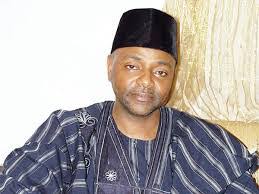
A major political shock has emerged within Nigeria’s opposition ranks as Mohammed Abacha reportedly lost the governorship ticket of the People’s Democratic Party (PDP) following a closely watched and highly competitive primary election.
The result, announced after delegates cast their votes in the party’s state-level primaries, marks a significant setback for the Abacha political dynasty’s renewed attempt to re-enter frontline electoral politics.
Party officials confirmed that the primary was conducted across accredited venues under strict supervision, with delegates from various local government areas participating in the selection process.
The outcome has since triggered intense political discussions across party structures and within Nigeria’s broader political landscape, particularly given the historical weight of the Abacha name in national affairs.
A Tight and Contested Primary Race
The PDP governorship primary, held in a yet-to-be-finally-clarified state structure, featured multiple aspirants vying for the party’s nomination ahead of the next general election.
According to party insiders, Mohammed Abacha entered the race with strong name recognition but faced stiff competition from long-established grassroots politicians within the party.
Delegates reportedly prioritized internal party loyalty, long-term engagement, and local political structures over national recognition when casting their votes.
As the collation concluded, Abacha was said to have fallen behind his main rivals, resulting in his loss of the party’s governorship ticket.
Delegates Favor Grassroots Structures
Party analysts suggest that the outcome reflects a broader trend within the PDP where grassroots mobilization and internal party networks are increasingly decisive in primary elections.
Many delegates reportedly aligned with candidates who had spent years building relationships within the party’s local government structures.
Political observers note that while Abacha’s name carries historical weight, it may not have translated into sufficient delegate support in the highly competitive internal process.
Some party members also cited concerns about electability and broader public perception as influencing their decision-making.
PDP’s Internal Democracy Tested Again
The PDP has continued to emphasize its commitment to internal democracy, frequently conducting primaries across Nigeria’s states to select candidates for various elective positions.
This latest governorship primary adds to a growing list of competitive internal elections within the party as it seeks to position itself as a strong opposition force.
Party officials described the process as peaceful, transparent, and compliant with internal electoral guidelines.
Security personnel were deployed across venues to ensure order, while party observers monitored proceedings to prevent irregularities.
Despite tensions typical of high-stakes primaries, no major disruptions were reported during the voting and collation process.
Political Implications of the Abacha Name
The Abacha family name remains one of the most politically sensitive in Nigeria due to the legacy of late military ruler General Sani Abacha, whose regime from 1993 to 1998 remains one of the most controversial periods in the country’s political history.
Mohammed Abacha’s entry into electoral politics has long attracted public attention, with analysts debating whether the family could successfully transition from military-era legacy to democratic participation.
His loss in the PDP primary may signal limits to the political influence of legacy names in Nigeria’s increasingly competitive democratic environment.
Rival Candidate Emerges Victorious
While official full results have not been universally released at the time of reporting, PDP electoral officials confirmed that another aspirant secured the highest number of delegate votes, clinching the party’s governorship ticket.
The winner, a long-time party stalwart with deep roots in state-level politics, is expected to lead the PDP into the next general election campaign in the state.
Supporters of the victorious candidate celebrated the outcome as a triumph of grassroots politics and party loyalty.
Reactions Within the Party
Following the announcement, reactions within the PDP have been mixed, with some members expressing surprise at the outcome while others described it as a reflection of democratic choice.
Party leaders urged all aspirants to accept the result and work toward unity ahead of the general election.
They emphasized that internal competition is a normal part of democratic processes and should not weaken party cohesion.
Some political observers believe the outcome may help the PDP strengthen its grassroots credibility by demonstrating that no candidate is guaranteed automatic victory based on name recognition alone.
Broader Electoral Strategy Concerns
The loss of Mohammed Abacha in the primary has also sparked discussions about the PDP’s broader electoral strategy as it prepares for upcoming elections.
Analysts suggest the party may be prioritizing candidates with stronger local structures and proven electoral performance over high-profile names.
This strategy, they argue, is aimed at increasing the party’s competitiveness against the ruling party in key states.
However, others warn that internal divisions could emerge if disappointed aspirants fail to fully accept primary outcomes.
Security and Electoral Conduct
The governorship primary was conducted under heightened security arrangements, with law enforcement agencies deployed to maintain peace at voting and collation centers.
Observers described the exercise as largely orderly, with delegates able to cast their votes without significant interference.
Party officials praised the professionalism of security agencies and electoral committee members involved in the process.
Looking Ahead to the General Election
With the PDP governorship candidate now emerging, attention shifts to the general election campaign expected in the coming months.
The party is expected to begin consultations, reconciliation efforts, and campaign structuring to strengthen its chances in the state.
Political analysts say the outcome of the primary could influence voter perceptions, particularly in regions where party unity and grassroots engagement play a crucial role.
Conclusion
The loss of Mohammed Abacha in the PDP governorship primary marks a significant political moment, highlighting both the competitiveness of internal party democracy and the evolving nature of Nigerian electoral politics.
While the Abacha name remains historically significant, the outcome suggests that grassroots mobilization and internal party structures continue to play a decisive role in determining political fortunes.
As the PDP moves forward, its ability to unify after a highly contested primary will be critical to its performance in the forthcoming general election.