A New Nuclear Era: What Trump’s Testing Order Means for Africa and Global Peace
Trump’s return to nuclear testing raises global tensions. What it means for Africa’s peace, economy, and Nigeria’s growing strategic vulnerability.
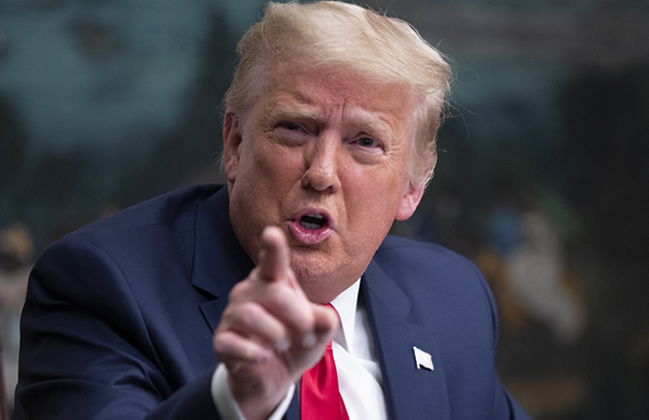
The world is once again standing on the edge of a nuclear brink. In a move that stunned global defense analysts, U.S. President Donald Trump ordered the Pentagon to resume nuclear weapons testing, abruptly ending more than three decades of restraint. The announcement, issued shortly before a planned diplomatic engagement with China’s President Xi Jinping in South Korea, has injected fresh instability into an already strained international security environment.
While reactions have poured in from Washington, Moscow, and Beijing, one region often left out of these conversations - yet deeply affected - is Africa. With histories of foreign militarization, resource extraction, and geopolitical vulnerabilities, African nations now watch with growing anxiety as major powers inch closer to a renewed nuclear arms race.
A Sudden Policy Shift with Global Repercussions
The last U.S. nuclear test took place in 1992, after which President George H.W. Bush initiated a moratorium adopted by multiple administrations - Democratic and Republican alike. The United States has since relied on computer simulations and subcritical tests, maintaining its arsenal without detonations underground.
Trump’s justification stems from escalating competition with Russia and China. Both countries have accelerated weapons development programs:
Russia claims to have successfully tested a nuclear-capable underwater drone called Poseidon - designed to trigger radioactive tsunamis.
China continues to expand its nuclear stockpile and hypersonic capabilities.
Trump argued that the U.S. must “match the pace”:
“Because of other countries’ testing programs, I have instructed the Department of War to start testing on an equal basis.”
He also boasted that America possesses the world’s largest nuclear arsenal, followed by Russia, with China “a distant third.”
That claim may be politically dramatic - but it underscores the rising military rivalry that could define this decade.
Africa’s Silent Stake in Nuclear Rivalries
Although far from the decision-making rooms, Africa remains vulnerable to nuclear arms escalation in multiple ways:
Benefits to Africa
It may lead to increased focus on global strategic zones and Africamay gain diplomatic leverage, Renewed investment in security infrastructure that may lead to better protection of sea routes and military modernization. It may also provide opportunity for Africa to demand for nuclear safeguards and Strengthens the Treaty of Pelindaba enforcement. Here is no gainsaying that a more unstable world means great powers want allies - and Africa’s geopolitical.
Africa’s significance rises:
Strategic waterways: Gulf of Guinea, Red Sea, Suez corridor
Critical minerals: uranium in Niger and Namibia
Growing markets with young populations
African leaders could negotiate better trade, security support, and economic partnerships if diplomacy is assertive.
Demerits for Africa
However, here are some challenges it could pose to Africa: owing to nuclear arm race, it might lead to resource diversion from development into military budgets, mineral exploitation where Uranium and rare-earth mining could intensify exploitation and conflict. Also, foreign military bases may expand causing some measure of loss of sovereignty by proxy conflicts while the continent may suffer humanitarian vulnerability owing to lack of nuclear defense capabilities.
Africa remains a non-nuclear continent, protected by the African Nuclear-Weapon-Free Zone Treaty (Pelindaba). A revived arms race undermines that ideal - especially if superpowers seek testing sites outside their territories, historically done in colonies and remote areas.
Nigeria: Geopolitical & Economic Concerns
Nigeria - Africa’s most populous country and largest economy - faces specific risks:
Energy and Infrastructure Pressures
Global instability typically pushes oil prices up, which may benefit Nigeria’s revenue but worsen pump prices and inflation domestically.
Security Threats in the Sahel
If international attention shifts to nuclear standoffs, terror networks in West Africa (ISIS-West Africa, Boko Haram) might exploit reduced oversight.
Dependency on Foreign Intervention
Nigeria relies on U.S. and European intelligence and military partnerships against insurgents. A nuclear-focused policy shift may reduce support.
Diplomatic Balancing
Nigeria will face pressure to take sides - a delicate situation with Chinese investments, U.S. defense cooperation, and Russian mercenary footprints in Africa.
Peace Advocates Sound the Alarm
Global non-proliferation groups fear that strategic restraint collapses, nuclear testing competitions escalate, and treaties may face abandonment.
The International Campaign to Abolish Nuclear Weapons (ICAN) issued a stark warning:
“Reckless and destabilizing… decades of progress at risk.”
With 12,000 nuclear warheads on Earth - 10,500 owned by the U.S. and Russia - the world is dangerously close to Cold War behavior but with 21st-century technology.
A Diplomatic Landscape on Life Support
Key arms control agreements have weakened or expired, with the INF Treaty terminated in 2019, and the withdrawal of the United States from Open Skies Treaty in 2020, as well as the weak enforcement and uncertain future of the START and New START, nuclear diplomacy now relies on political personalities, not global frameworks - a fragile situation as nationalists rise across continents.
How Africa Can Respond: A Strategic Roadmap
Instead of being spectators, African leaders can position the continent as a moral and diplomatic anchor by strengthen AU diplomatic coordination, enforcing Pelindaba Treaty compliance, demand mineral safety & fair contracts, develop renewable energy to reduce geopolitical vulnerability, advocate for nuclear disarmament zones at UN forums, and position Africa as the global center for peace negotiation. If managed well, Africa becomes a global voice for stability, not a battlefield for superpower influence.
A Return to Tension - or a Moment of Opportunity?
Trump’s decision may be interpreted as a nationalistic military gamble, a pressure tactic ahead of negotiations or a signal that arms race logic is back. But the consequences will ripple far beyond Washington and Moscow. Africa, with its potential wealth and fragile systems - will feel the effects more deeply than most.
The question now is, will African leaders allow superpowers to shape their fate again, or will they use this tense moment to demand respect, security, and sovereignty?
Source Links
Federation of American Scientists Nuclear Arms Status