A New Era of Deepening Divide as Appointment of Lesbian as Archbishop of Wales Exposes Global Anglican Tensions
The installation of Cherry Vann as the first female and openly lesbian Archbishop of Wales has sparked celebrations in Wales and sharp criticism in Nigeria, exposing deep divisions within the global Anglican Communion.
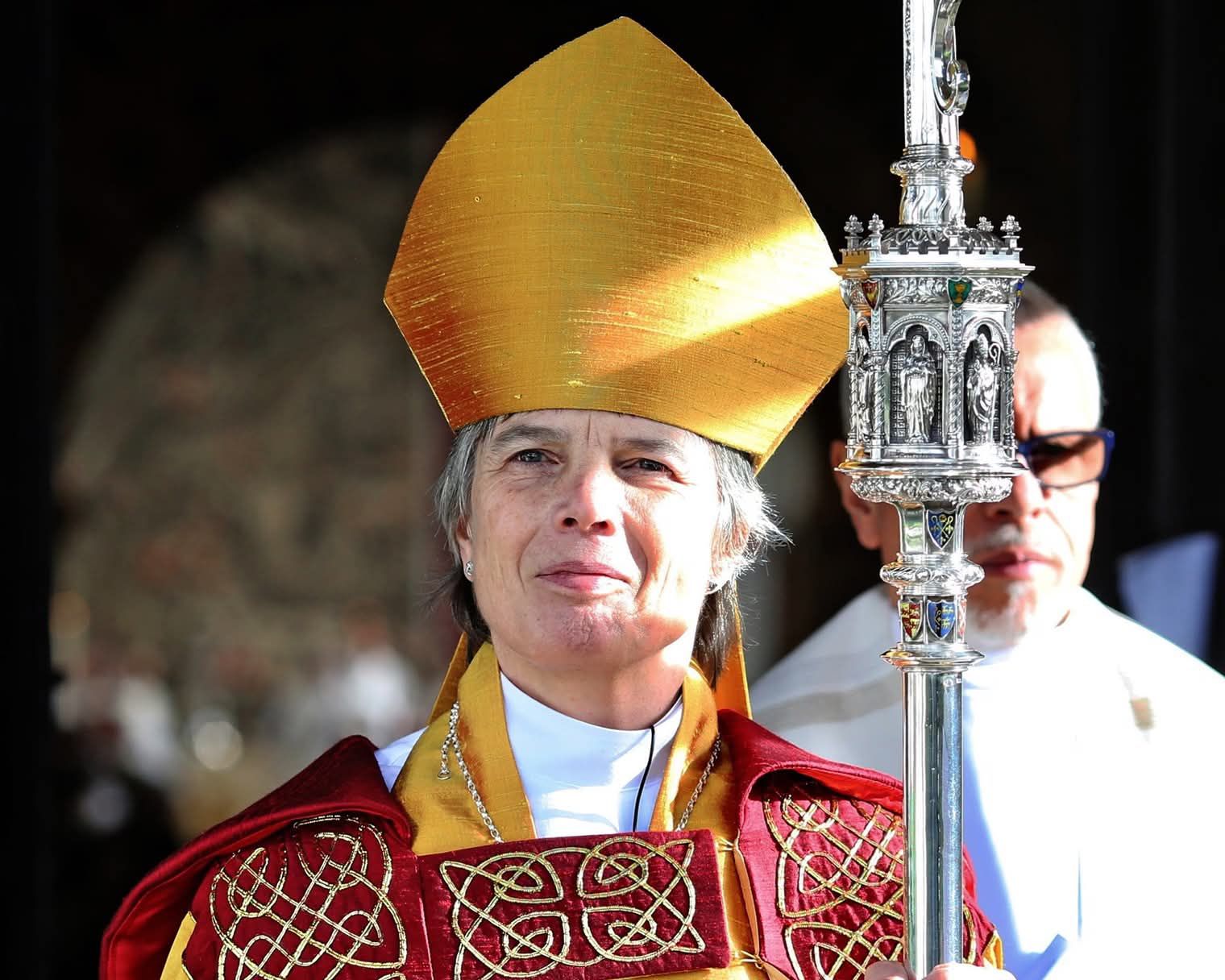
In a move hailed as historic in Wales but criticized sharply in parts of the Global South, the Anglican Church has installed Cherry Vann as the new Archbishop of Wales - a landmark appointment that makes her the first woman, and the first openly lesbian cleric, to occupy the role in the Church’s history.
Vann’s enthronement took place at the ancient Saint Woolos Cathedral in Newport, marking a significant milestone for the Church in Wales, which has steadily embraced more inclusive policies in recent decades. However, the celebration in Wales has been countered by heated debate across continents - especially within Africa, where several Anglican provinces, including the Church of Nigeria, have rejected the appointment completely.
Viewed through the lens of global Christianity, Vann’s elevation is more than a personnel change. It is a symbolic flashpoint in a long-running struggle within the Anglican Communion over doctrine, sexuality, and the future identity of the Church worldwide.
A Historic Moment in Wales
Cherry Vann’s journey to the archbishopric is both personal and institutional. Her election in July by the Church in Wales’ Electoral College followed years of service, during which she earned a reputation for administrative competence, pastoral care, and steady leadership.
Her formal enthronement ceremony drew clergy, laity, and civic leaders from across Wales. In her inaugural address, she highlighted themes of compassion, inclusion, and spiritual integrity - values she said are central to the Gospel.
But it was her personal story that most captured public attention. For years, Vann said she felt compelled to hide her sexuality, fearing that being open would jeopardize her ministry. Her partner, Wendy Diamond, often avoided public events to protect the couple’s privacy. It was only after relocating to Wales that the couple found the freedom to live openly, with Diamond now participating in official events beside her.
To many in Wales, her appointment symbolizes progress - an affirmation that the Church can evolve without abandoning its spiritual mission.
Strong Pushback from Nigeria and the Global South
Thousands of miles away, however, reactions could not be more different. The Church of Nigeria (Anglican Communion) - one of the most populous and influential churches in the Anglican world - condemned the development in an official statement led by its Primate, Archbishop Henry Ndukuba.
Ndukuba called the appointment a “serious departure from biblical teaching” and insisted that the Church of Nigeria would not recognise Vann’s election. He cited 2 Timothy 4:3–4, warning that churches that embrace non-traditional doctrines risk abandoning the foundation of Christian faith.
According to Archbishop Henry Ndukuba, “The election of Bishop Vann is a clear revelation that many who claim to be members of the body of Christ can’t endure sound doctrine.” He also accused Vann of being “complicit” in the broader same-sex marriage crisis within the global Anglican community.
Nigeria’s reaction aligns with the position of several Anglican provinces across Africa, including Uganda, Kenya, Tanzania, and Rwanda. These churches argue that Western Anglican provinces have drifted into moral relativism, disregarding biblical authority for cultural trends.
This theological standoff is neither sudden nor isolated. For nearly two decades, differing views on sexuality have threatened to fracture the Anglican Communion, the third largest Christian denomination in the world after Catholicism and Eastern Orthodoxy.
A Deeper Global Rift: The Anglican Communion at a Crossroads
Vann’s appointment highlights an uncomfortable truth: the Anglican Communion is effectively operating with two contrasting theological identities.
1. The Western Provinces
- Emphasize inclusion, social justice, and evolving interpretations of scripture.
- Advocate for LGBTQ+ inclusion in ministry and marriage.
- Prioritise cultural relevance and pastoral care.
2. The Global South (Especially Africa and Asia)
- Uphold conservative biblical interpretations.
- Reject same-sex unions and LGBTQ+ clergy.
- Emphasize church tradition and scriptural authority.
The issue goes beyond personal belief. it shapes church governance, mission strategy, and global influence.
In Africa, where Anglicanism is growing rapidly, church leaders argue that Western churches are imposing values that conflict with African societal norms and theological convictions, while in the West, leaders like Vann argue that the Gospel calls for compassion and inclusion, especially for marginalized groups.
The question now facing the Communion is whether unity is still possible - or whether doctrinal differences are simply too wide to bridge.
What Does Vann’s Appointment Mean for Global Religion?
1. A Sign of Changing Times
The appointment reflects broader shifts in Western Christianity, which is increasingly aligning with evolving cultural norms around gender and sexuality.
2. A Challenge to Traditional Authority
African churches - now demographically dominant, may push for a restructuring of the Communion to reflect their growing influence.
3. A New Front in the Battle for Anglican Identity
Does Anglicanism remain a global church with diverse practices, or will it divide along ideological lines?
These questions shape not just theology, but geopolitics, cultural identity, and interfaith relations.
Implications for Nigeria and Africa
1. A Reinforcement of Conservative Values
Nigeria’s strong rejection signals a commitment to defending traditional doctrines, solidifying its position as a leading voice in global evangelical conservatism.
2. Increased Tensions with Western Provinces
Formal non-recognition could lead to a parallel church structures, breakaway dioceses, and reduced cooperation in mission and charity work
3. Potential Impact on African Christians Abroad
Nigerian and African Anglicans living in the UK, US, and Europe may face confusion or conflict when worshipping in churches with differing doctrines.
4. Cultural and Societal Reflections
The divide reflects broader tensions within African societies, where traditional values often clash with global rights-based narratives.
Looking Ahead: Unity or Fragmentation?
Cherry Vann’s historic appointment is a milestone for Wales and a symbol of hope for many in the LGBTQ+ Christian community. Yet it also exposes the fragile and fracturing state of global Anglicanism. The Communion now faces a defining question:
Can a single global church contain such widely divergent beliefs? For now, the answer remains uncertain, as only time will tell.