A Historic Landmark as Venezuela Stuns USA to Win 2026 World Baseball Classic
Venezuela’s shocking 3 - 2 victory over the United States in the 2026 World Baseball Classic signals a shift in global baseball power, challenging long-held dominance and redefining the sport’s future.
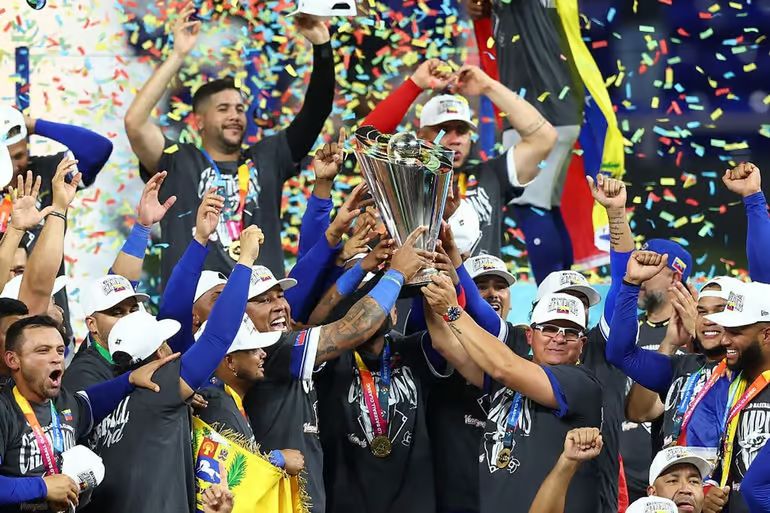
In one of the most dramatic upsets in modern baseball history, Venezuela defeated the United States 3 - 2 to win the 2026 World Baseball Classic. The victory, sealed by a ninth-inning hit from Eugenio Suárez, stunned fans and analysts alike, especially given the star-studded American lineup.
Beyond the scoreboard, however, this result carries far-reaching implications for the global game of baseball - reshaping perceptions of dominance, competitiveness, and the sport’s international future.
The Game That Defied Expectations
Played on March 17, 2026, in Miami, the final saw Venezuela hold its nerve against a heavily favored U.S. team featuring MLB superstars like Aaron Judge and Bryce Harper.
Despite a late surge from the Americans - highlighted by Harper’s game-tying home run - Venezuela responded immediately. Suárez’s decisive ninth-inning double secured the winning run, while closer Daniel Palencia shut down the U.S. in the final inning. (AP News)
The result was not just a victory - it was Venezuela’s first-ever World Baseball Classic title, marking a historic milestone. (Wikipedia)
Why This Was a Shock
Heading into the tournament, the United States was widely regarded as the favorite. With access to the world’s deepest baseball talent pool through Major League Baseball, Team USA’s roster boasted elite hitters and pitchers.
However, the tournament exposed a key weakness: inconsistency. The U.S. struggled offensively throughout the knockout stages, managing limited scoring despite its lineup strength.
In contrast, Venezuela relied on discipline, pitching efficiency, and timely hitting hallmarks of tournament-style baseball.
The Rise of Venezuela as a Baseball Power
Baseball is deeply embedded in Venezuelan culture, where it stands as the country’s most popular sport.
Over decades, Venezuela has produced a steady stream of MLB stars, and in recent years, its national team has become increasingly competitive. Yet, until 2026, it had never captured a major global title in the modern era.
This victory changes that narrative completely.
With standout performances from players like Maikel García - who was named tournament MVP - the team demonstrated that Venezuela is no longer just a talent supplier to MLB, but a fully realized baseball powerhouse. (The Guardian)
What This Means for Global Baseball
1. End of U.S. Psychological Dominance
For decades, the United States has been seen as baseball’s undisputed leader. While other nations have been competitive, few victories have carried the symbolic weight of defeating the U.S. in a global final.
Venezuela’s win challenges that perception.
It signals that baseball is no longer America’s uncontested domain but a truly global sport in which multiple nations can compete and win at the highest level.
2. Latin America’s Growing Influence
The victory reinforces the dominance of Latin American countries in global baseball. Venezuela now joins the Dominican Republic as World Baseball Classic champions.
These nations continue to produce elite talent at remarkable rates, often with fewer resources than their North American counterparts.
The implication is clear: the center of baseball excellence is shifting, with Latin America playing an increasingly central role.
3. Tournament Baseball vs League Baseball
One of the biggest lessons from the upset is the difference between league play and tournament play.
While MLB rewards long-term consistency, international tournaments reward clutch performance, pitching depth, and tactical execution.
Venezuela excelled in these areas, proving that a well-coordinated national team can overcome even the most individually talented roster.
4. A Boost for International Competitions
The 2026 final attracted record viewership and global attention, underscoring the growing importance of international baseball competitions.
Venezuela’s victory adds a compelling storyline to future tournaments, increasing fan interest and global engagement.
For governing bodies, this is a major win - it validates efforts to expand baseball’s global footprint and competitiveness.
The Emotional and Political Undercurrents
The match carried significance beyond sports. Amid political tensions and economic struggles at home, Venezuela’s victory sparked nationwide celebrations, with the government even declaring a public holiday. For many Venezuelans, the win represented unity, pride, and hope.
Even in the United States, the result sparked reflection not just on the loss, but on the evolving global landscape of the sport.
Lessons for Team USA
For the United States, the defeat raises important questions.
Despite having unmatched resources and talent, the team has now gone to multiple tournaments without reclaiming the title.
Key takeaways include: the need for better roster cohesion, greater emphasis on pitching strategy, and improved adaptation to tournament pressure.
Managerial decisions and preparation strategies will likely come under scrutiny ahead of future competitions.
A Turning Point for the Sport
Venezuela’s triumph could mark a turning point in baseball history.
Sports have long sought broader international appeal, particularly in regions where football dominates. This result provides a compelling narrative: that baseball is competitive, unpredictable, and truly global.
It also sends a message to emerging baseball nations: the gap can be closed.
Conclusion
Venezuela’s 3 - 2 victory over the United States in the 2026 World Baseball Classic is more than an upset - it is a defining moment for global baseball.
It challenges traditional hierarchies, highlights the rise of new powers, and underscores the evolving nature of sport. For fans, it delivered drama and history. For the game itself, it may represent the beginning of a new era. As baseball continues to globalize, one thing is now certain: no team, not even the United States, can take dominance for granted anymore.