2027 Presidency: Why the Southeast Must Prioritise Strategy Over Sentiment
As 2027 approaches, Southeast leaders are being urged to abandon emotional appeals and adopt a clear political strategy to avoid decades of exclusion from Nigeria’s presidency.
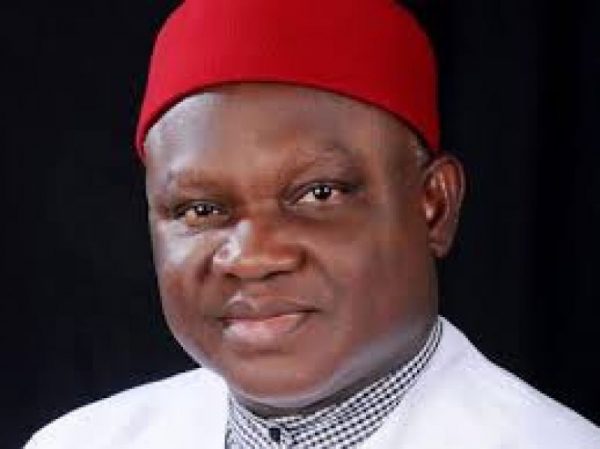
As Nigeria edges closer to the 2027 general elections, a renewed debate is emerging over the political future of the Southeast. Former House of Representatives member and public affairs analyst, Chief Linus Okorie, has issued a pointed warning to political leaders and stakeholders in the zone: moral arguments and historical grievances, while valid, are no longer sufficient to secure presidential power. What the region needs now, he argues, is a deliberate, time-bound political strategy.
Speaking from Abakaliki, Ebonyi State, Okorie said the long-running argument about whether the Southeast deserves the presidency has effectively been settled in the court of public opinion. According to him, continuing to seek validation on that question is a distraction. The more pressing issue is how and when the region can realistically translate that moral claim into actual political power.
From entitlement to execution
Okorie stressed that Nigeria’s political history shows that the presidency is rarely won on the basis of sentiment, fairness, or emotional appeal. Instead, power transitions are driven by strategy, coalition-building, timing, and political arithmetic.
Every region that has successfully produced a president since 1999, he noted, understood this reality early and organised itself accordingly. Emotional narratives may mobilise grassroots support, but they do not, on their own, overcome entrenched party structures, financial power, or elite alliances at the national level.
This is why, he said, the Southeast must now shift from a politics of complaint to a politics of calculation.
The APC pathway and the problem of time
A central pillar of Okorie’s argument is a cold assessment of the All Progressives Congress (APC) power rotation trajectory. Under prevailing assumptions, President Bola Tinubu is expected to seek and possibly secure a second term in 2027, keeping power in the Southwest until 2031.
From there, Okorie projects that political power would likely rotate back to the North for another two terms, potentially lasting until 2039. Only after that would the presidency return to the South, where the Southeast would again have to compete internally with the South South.
In this scenario, Okorie argues, the Southeast is structurally disadvantaged. Factors such as oil wealth, national economic leverage, security considerations, and recent alignment with incumbent power structures place the South South in a stronger position within the APC framework.
If a South South candidate were to emerge in 2039, the Southeast’s presidential ambition could be postponed yet again, possibly until 2055. From the vantage point of 2027, that represents a waiting period of up to 28 years.
Okorie was careful to note that this is not an attack on the APC or its Southeast members, but a realistic reading of political probabilities. Nigerian politics, he said, rewards advantage and leverage more often than moral symmetry.
Lessons from Nigeria’s recent history
To underscore his point, Okorie referenced Nigeria’s post-1999 political experience, where the Southwest has maintained a near-continuous presence at the highest levels of power either as president or vice president for over two decades. This dominance, he argued, was not accidental but the product of strategic organisation, elite consensus, and effective negotiation within national power structures.
Equity arguments were present, but they were reinforced by planning and leverage.
The ADC alternative: a compressed timeline
In contrast, Okorie described the African Democratic Congress (ADC) as offering the Southeast a fundamentally different strategic opportunity. Within the ADC’s evolving coalition, he said, the Southeast is positioned not as a peripheral player but as a central pillar.
Under this pathway, several scenarios emerge—each with significantly shorter and clearer timelines:
A Southeast presidential candidate could emerge as early as 2027, resulting in immediate realisation of the region’s ambition.
A one-term North-Southeast arrangement could place a Southeast president in office by 2031, a four-year wait.
Even a two-term transitional arrangement extending to 2035 would mean an eight-year wait still dramatically shorter than the APC scenario.
When compared side by side, Okorie noted, the difference is stark:
APC pathway: 12 to 28 years
ADC pathway: 0 to 8 years
This, he said, is the essence of strategic politics, balancing aspiration with time, certainty, and risk.
What this means for the Southeast
Okorie’s intervention is ultimately a call for strategic maturity. He urged Southeast leaders to fuse principle with pragmatism and to embrace data-driven decision-making that evaluates not only what is just, but what is achievable within a realistic timeframe.
The region, he argued, must ask difficult questions about alliance choices, party platforms, and long-term consequences rather than reacting emotionally to political developments.
“The presidency of Nigeria is not awarded for patience alone,” Okorie said. “It is secured through clarity of purpose, unity of direction, and strategic timing. History will judge us not by the passion of our complaints, but by the wisdom of our choices.”
As 2027 draws nearer, the Southeast faces a defining decision: continue to rely on sentiment and historical grievance, or adopt a calculated strategy designed to convert long-held aspirations into real political
Sources
Vanguard Nigeria - Southeast and 2027 presidency debates
The Guardian Nigeria - Power rotation and zoning politics
Premium Times - Analysis of Nigeria’s party structures and zoning arrangements
Independent National Electoral Commission (INEC) background on party dynamics