2027: Jonathan Considers Political Comeback as Court Hears Eligibility Suit
Former Nigerian President Goodluck Jonathan is considering a 2027 presidential comeback as a Federal High Court hears a suit challenging his eligibility. Here’s what the case means for Nigeria’s politics and the 2027 elections.
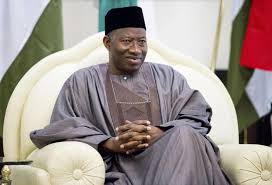
Nigeria’s political landscape may be heading toward one of its most dramatic election cycles in decades as former President Goodluck Jonathan weighs a possible return to power ahead of the 2027 presidential election.
The development comes as a Federal High Court in Abuja began hearing a controversial suit challenging Jonathan’s constitutional eligibility to contest the presidency again. The case has already sparked intense political debate across Nigeria, reopening long-standing arguments about constitutional term limits, zoning politics, and the future of opposition politics ahead of 2027.
Jonathan, who served as Nigeria’s president between 2010 and 2015, confirmed this week that he is consulting widely before making any decision regarding a possible return to the presidential race.
Speaking while receiving youth groups urging him to contest, the former president said the presidency was “not a computer game” and stressed that leadership decisions required careful consultation. (Punch Newspapers)
The Court Case Challenging Jonathan’s Eligibility
At the centre of the controversy is a suit filed at the Federal High Court in Abuja by lawyer Johnmary Jideobi, who argues that Jonathan is constitutionally barred from seeking another term as president. (Vanguard News)
The plaintiff contends that Jonathan already exhausted the constitutional limit for the presidency after completing the tenure of late President Umaru Musa Yar'Adua in 2010 and subsequently winning a full four-year term in the 2011 election.
The suit asks the court to restrain Jonathan from presenting himself as a candidate for any political party in 2027 and to prevent the Independent National Electoral Commission (INEC) from accepting or publishing his name as a presidential candidate.
The legal argument revolves around Section 137(3) of the Nigerian Constitution, which deals with presidential tenure limits after constitutional amendments introduced following the Yar’Adua succession crisis.
Jonathan’s legal team, however, has questioned the basis of the case, arguing that similar constitutional issues had already been addressed previously by Nigerian courts.
On Friday, Justice Peter Lifu adjourned the case until May 11 after procedural issues involving court filings and responses from the parties.
Why Jonathan’s Possible Return Matters
Jonathan’s potential return has immediately transformed the early political conversation around the 2027 election.
Although he has not officially declared his candidacy, his comments have fueled speculation that several political groups may be attempting to recruit him as a consensus figure capable of uniting opposition forces against the ruling All Progressives Congress (APC).
Since leaving office in 2015 after losing to former President Muhammadu Buhari, Jonathan has largely maintained an image as a statesman rather than an active partisan politician.
He has gained significant international recognition for election observation work, peace mediation, and diplomatic roles across Africa. His peaceful concession after the 2015 election also strengthened his democratic reputation internationally.
For many Nigerians dissatisfied with current economic hardship, insecurity, and political instability, Jonathan’s era is increasingly viewed through a nostalgic lens.
Some supporters believe his administration represented a more stable political and economic period compared to Nigeria’s recent years of inflation, fuel crises, insecurity, and currency instability.
Opposition Politics Could Change Dramatically
Jonathan’s possible entry into the race could completely reshape opposition politics ahead of 2027.
Several opposition parties and political blocs are currently fragmented, with no universally accepted challenger to President Bola Ahmed Tinubu emerging so far.
Political analysts believe Jonathan could become an attractive compromise candidate because of his national recognition, international image, and ability to attract support across different regions and political camps.
Unlike many opposition figures, Jonathan also carries relatively less political hostility among some northern political actors despite previous electoral rivalries.
However, zoning politics may complicate any potential bid.
Nigeria’s informal power-sharing tradition often rotates the presidency between the North and South. Since Tinubu, a southerner, is expected to seek re-election in 2027, many APC supporters argue that power should remain in the South for another term before rotating northward again.
Jonathan, who comes from Bayelsa State in the South-South region, could therefore face criticism from politicians insisting on zoning continuity.
The Constitutional Debate
The eligibility lawsuit has reignited legal and constitutional debates that have lingered for years.
Jonathan first became president in May 2010 following Yar’Adua’s death. He then won a fresh mandate in the 2011 election and served until 2015 after losing to Buhari.
Critics argue that allowing Jonathan to contest again could potentially enable someone to take the presidential oath three times, which they believe violates the spirit of Nigeria’s constitutional term-limit provisions.
Supporters of Jonathan, however, maintain that he was only elected once as president and therefore remains constitutionally eligible for another elected term.
Some constitutional analysts also point out that amendments introduced after the Yar’Adua transition were intended primarily to prevent extended tenure accumulation by vice presidents completing partial terms.
The court’s eventual ruling could therefore become one of the most significant constitutional interpretations ahead of the 2027 election.
What It Means for Tinubu and the APC
Even without officially declaring, Jonathan’s possible comeback already creates new political calculations for the ruling APC.
President Tinubu’s administration is facing mounting public frustration over inflation, unemployment, fuel prices, insecurity, and economic reforms that have increased hardship for many Nigerians.
A Jonathan candidacy could potentially attract dissatisfied voters seeking an experienced alternative without embracing more radical opposition figures.
The APC would also face a more complicated electoral landscape if opposition parties rally behind a single widely recognized candidate.
At the same time, Jonathan’s candidacy could divide opposition coalitions if ambitious younger politicians refuse to step aside for another former president.
Youths and Public Sentiment
Interestingly, much of the renewed pressure on Jonathan appears to be coming from youth groups and political organisations urging him to return.
During his recent remarks, Jonathan praised young Nigerians for remaining interested in the country’s democratic process and encouraged them to advocate for peaceful and credible elections.
He also expressed concern over Nigeria’s persistently low voter turnout, describing it as one of the worst among major democracies.
Whether this youth enthusiasm translates into actual political momentum remains uncertain, but it signals growing dissatisfaction with Nigeria’s current political direction.
A Political Storm Still Developing
For now, Jonathan remains officially undeclared, while the courts continue examining the constitutional questions surrounding his eligibility.
Yet the mere possibility of his return has already injected fresh uncertainty into Nigeria’s 2027 political calculations.
If the court rules in his favour and Jonathan eventually joins the race, Nigeria could witness one of the most consequential presidential contests since the return to democracy in 1999.
The outcome may not only determine who governs Nigeria after 2027, it could also redefine constitutional precedent, opposition unity, and the future balance of power in Africa’s largest democracy.