2027 Elections: Kwara APC Caucus Endorses Tinubu for Re-election, Backs Ex-Party Chair for Governor
Kwara APC caucus endorses President Bola Tinubu for 2027 and backs former party chairman for governorship. Analysis of political implications, party unity, and early election strategies.
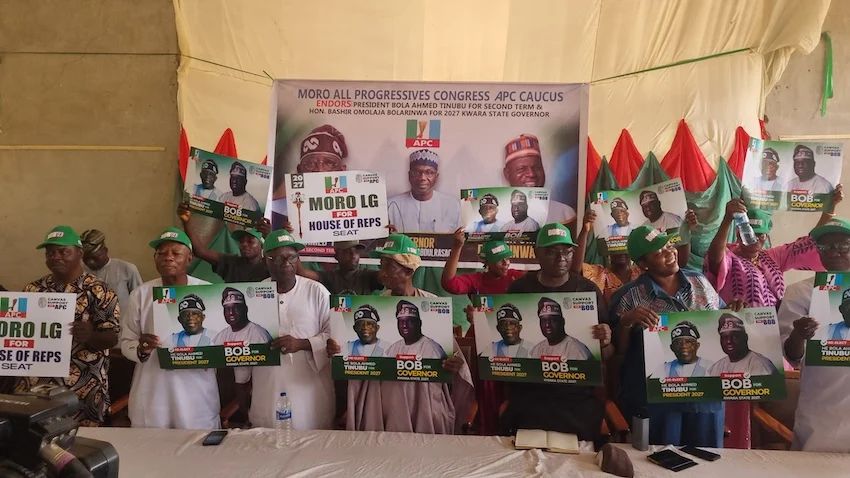
Nigeria’s 2027 political landscape is already taking shape as the Kwara State caucus of the All Progressives Congress (APC) has formally endorsed Bola Ahmed Tinubu for a second term in office. At the same time, the caucus threw its weight behind a former state party chairman as its preferred candidate for the governorship race.
The dual endorsement signals not just early political positioning, but a coordinated attempt to consolidate power, maintain party unity, and shape electoral outcomes well ahead of the official campaign season.
The Endorsement Announcement
The decision was reached during a high-level meeting of APC stakeholders in Kwara State, where party leaders, elected officials, and influential members gathered to deliberate on the party’s future.
In a communique issued after the meeting, the caucus unanimously endorsed Tinubu for re-election in 2027, citing his leadership, economic reforms, and commitment to national development. (punchng.com)
Simultaneously, the caucus backed a former state APC chairman as its preferred governorship candidate, signaling a desire for continuity and internal cohesion within the party.
Why Tinubu? The Logic Behind the Endorsement
The Kwara APC caucus justified its endorsement of Tinubu on several grounds:
1. Policy Continuity: Party leaders argued that Tinubu’s economic reforms, particularly in fiscal restructuring and subsidy removal, require time to yield full results. A second term, they believe, would ensure continuity and stability.
2. Party Loyalty and Structure: Tinubu is widely regarded as a central figure in the APC’s national structure. His long-standing influence within the party makes him a unifying force, especially as internal divisions threaten cohesion in some states.
3. Strategic Early Positioning: By endorsing Tinubu early, the Kwara APC aims to:
- Aligning with the national leadership
- Secure political relevance within the party hierarchy
- Avoid internal conflicts over presidential preferences
The Governorship Angle
Equally significant is the endorsement of a former APC state chairman for the 2027 governorship race.
While the individual’s name carries weight within party circles, the decision reflects a broader strategy:
Consolidation of Internal Power
By choosing a party insider, the APC prioritizes loyalty and familiarity over external appeal.
Avoiding Internal Fragmentation
Early endorsement helps prevent factional disputes that could weaken the party ahead of elections.
Grooming a Successor
With the current administration expected to complete its tenure, the party is positioning a candidate it believes can sustain its influence in the state.
Kwara: A Strategic Political State
Kwara State occupies a unique position in Nigeria’s political landscape. Historically dominated by political dynasties, the state witnessed a major shift in 2019 when the APC dislodged long-standing structures under the “O to ge” (Enough is enough) movement.
Since then, maintaining political control has been a priority for the APC.
The latest endorsements suggest that the party is keen to:
- Preserve its gains
- Prevent the resurgence of opposition forces
- Strengthen grassroots mobilization ahead of 2027
Implications for Nigeria’s Political Climate
1. Early Campaign Season: Although the 2027 elections are still some distance away, endorsements like this effectively mark the beginning of political campaigns.
They set the tone for:
- Alliance building
- Candidate positioning
- Policy messaging
2. Pressure on Opposition Parties: The APC’s early endorsement of Tinubu put pressure on opposition parties, including the People's Democratic Party (PDP) and the Labour Party (LP), to clarify their own strategies.
Opposition groups must now:
- Identify credible candidates
- Strengthen internal unity
- Counter the APC’s narrative of continuity
3. Internal Party Dynamics: While endorsements can unify, they can also create tension.
Within the APC, some stakeholders may feel sidelined by early decisions, particularly those with presidential or governorship ambitions.
Managing these internal dynamics will be crucial to maintaining party cohesion.
4. Reinforcement of Incumbency Advantage
Endorsing a sitting president reinforces the advantages of incumbency:
- Access to State Resources
- Visibility and influence
- Ability to shape policy narratives
This makes the political playing field more challenging for opposition candidates.
Criticism and Concerns
Not everyone views the endorsements positively.
Critics argue that:
Premature Politics: Focusing on 2027 so early could distract us from governance and policy implementation.
Limited Internal Democracy: Early endorsements may discourage open competition within the party, reducing opportunities for alternative candidates.
Risk of Overconfidence: There is also the danger that early endorsements could lead to complacency, especially if public sentiment shifts before the elections.
Tinubu’s Path to 2027
For Bola Ahmed Tinubu, the endorsement represents both support and expectation.
While it strengthens its position within the APC, it also raises the stakes:
- Economic reforms must deliver tangible results
- Security challenges must be addressed
- Public confidence must be maintained
Failure in these areas could weaken the very support that early endorsements seek to solidify.
The Road Ahead
The Kwara APC’s move is likely to trigger similar endorsements in other states, creating a ripple effect across the country.
As more party structures align behind Tinubu, the political narrative may increasingly center on continuity versus change, a familiar theme in Nigerian elections.
Conclusion: A Strategic Move with Long-Term Consequences
The endorsement of Tinubu and a preferred governorship candidate by the Kwara APC caucus is more than a routine political gesture; it is a strategic move that sets the stage for the 2027 elections.
It reflects a party seeking to consolidate power, manage internal dynamics, and position itself for electoral success.
However, the true test lies ahead. Endorsements alone do not win elections; performance, public perception, and political strategy will ultimately determine the outcome.
As Nigeria moves closer to 2027, one thing is clear:
The race has already begun.